
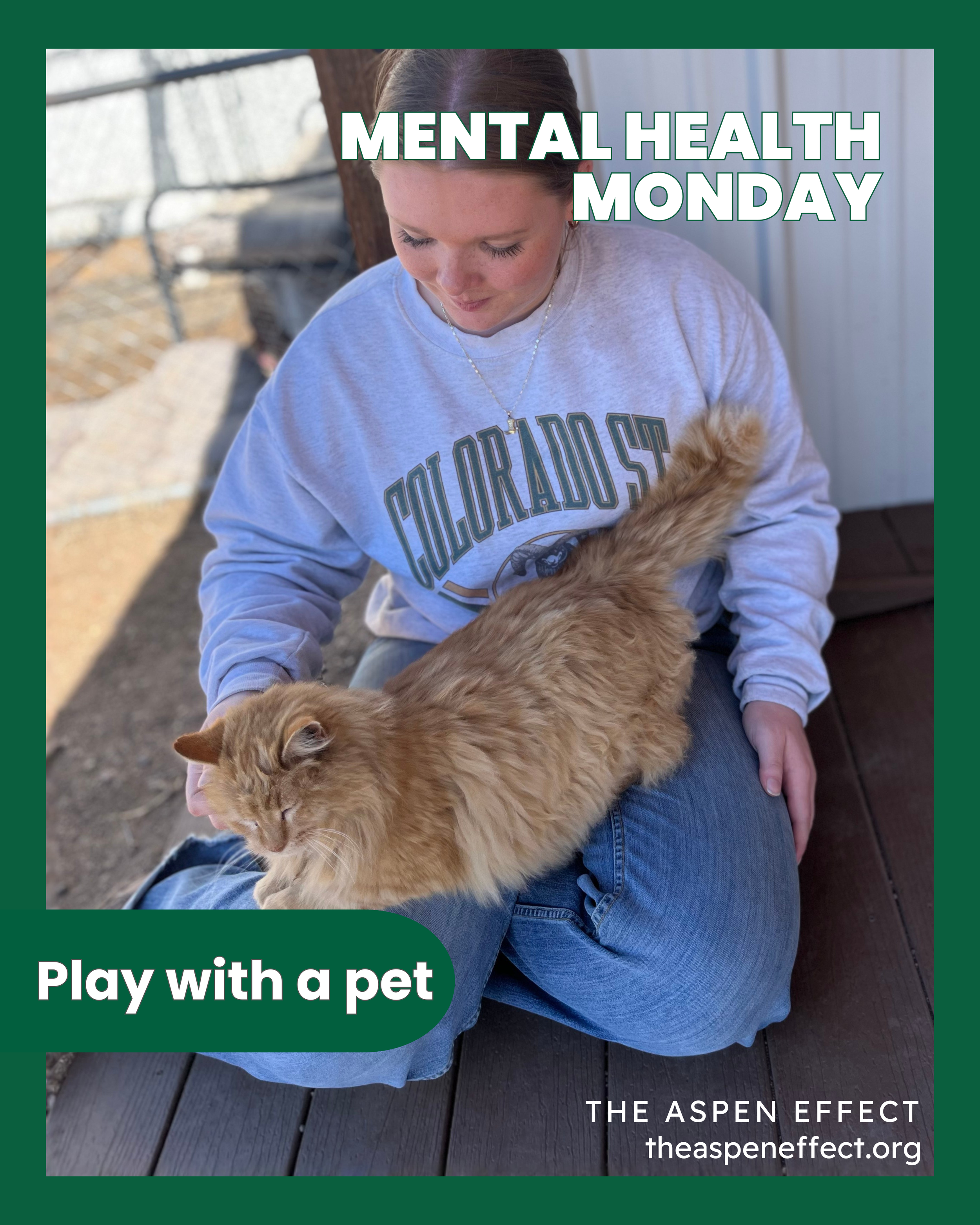
Play with a Pet
Playing with a pet can do more than make you smile. Tossing a ball, going for a walk, or simply sitting and petting an animal can help lower stress, ease tension, and calm your mind. Pets encourage us to slow down, notice the moment, and just be present. When life feels heavy or overwhelming, animals offer comfort and companionship without needing words. Their presence reminds us that we are not alone and that even small moments of connection can lift our spirits.
Spending time outside with a pet adds even more benefits. Fresh air fills your lungs, open space invites movement, and being in nature can help your body and brain feel more balanced. Running, walking, exploring, or just sitting in the sun with an animal can spark joy, inspire curiosity, and give your mind a break from worries. This is a core part of our work; helping young people connect with nature, animals, and caring mentors to feel grounded, connected, and supported. These moments outside help build resilience, calm, and a sense of belonging that lasts beyond the walk or playtime.
Sometimes healing starts with a furry friend and a few deep breaths outside. A gentle pat, a wagging tail, or the warmth of a snuggle can open a door to calm, reflection, and hope. Nature and animals together remind us to breathe, notice the world around us, and find small ways to care for ourselves. Even a few minutes can help restore balance, ease stress, and remind us that growth and comfort are always possible. One step, one breath, and one paw at a time.
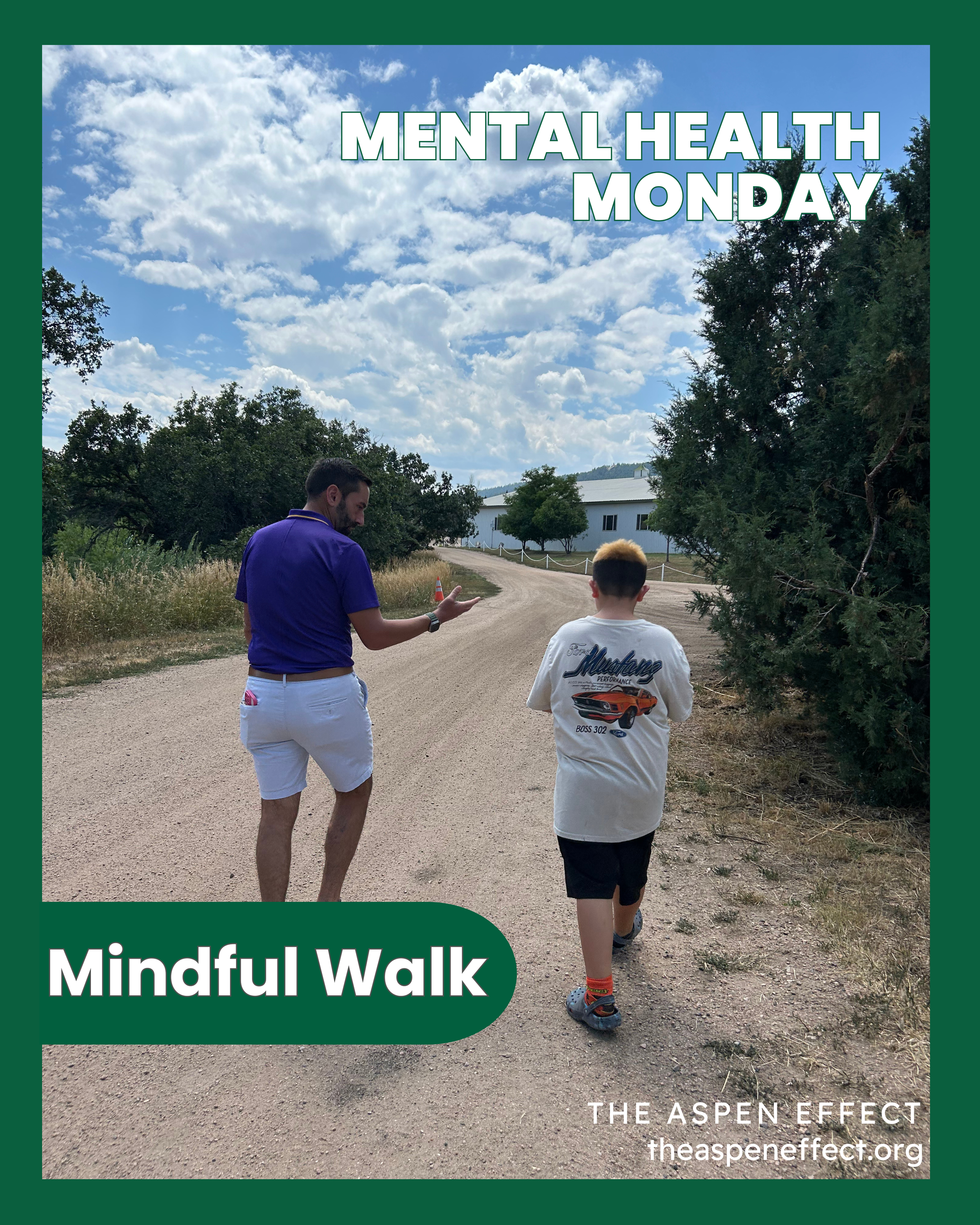
Mindful Walk
Take a mindful walk outside in your yard, a park, or any outdoor space and give yourself a real break from screens, noise, and constant demands. You do not need special equipment or a long stretch of time. Just step outside, slow your pace, and allow yourself to be present where you are.
As you begin walking, notice your breathing. Take a few steady breaths and feel the air move in and out of your body. Look up at the sky, notice the light, and feel the ground beneath your feet. Let your shoulders relax. Let your body settle into the rhythm of each step.
As you continue, pay attention to small details around you. Notice leaves moving in the wind, birds calling, or sunlight warming your skin. You might feel the texture of the path, grass, or pavement under your shoes. If your mind starts to wander or race, gently bring your attention back to what you can see, hear, or feel right now.
A mindful walk can help lower stress, release tension, and clear your mind. Even a short time outdoors can help your nervous system slow down and reset. When you return, you may feel more calm, focused, and grounded, with a little more space to breathe and take on the rest of your day.
Make Connections
Connection plays a powerful role in youth mental health. When young people feel connected, they are more likely to feel safe, supported, and hopeful.
At The Aspen Effect, connection is a core part of how youth heal and grow. Safe relationships and welcoming spaces help young people know they belong and that they are not alone.
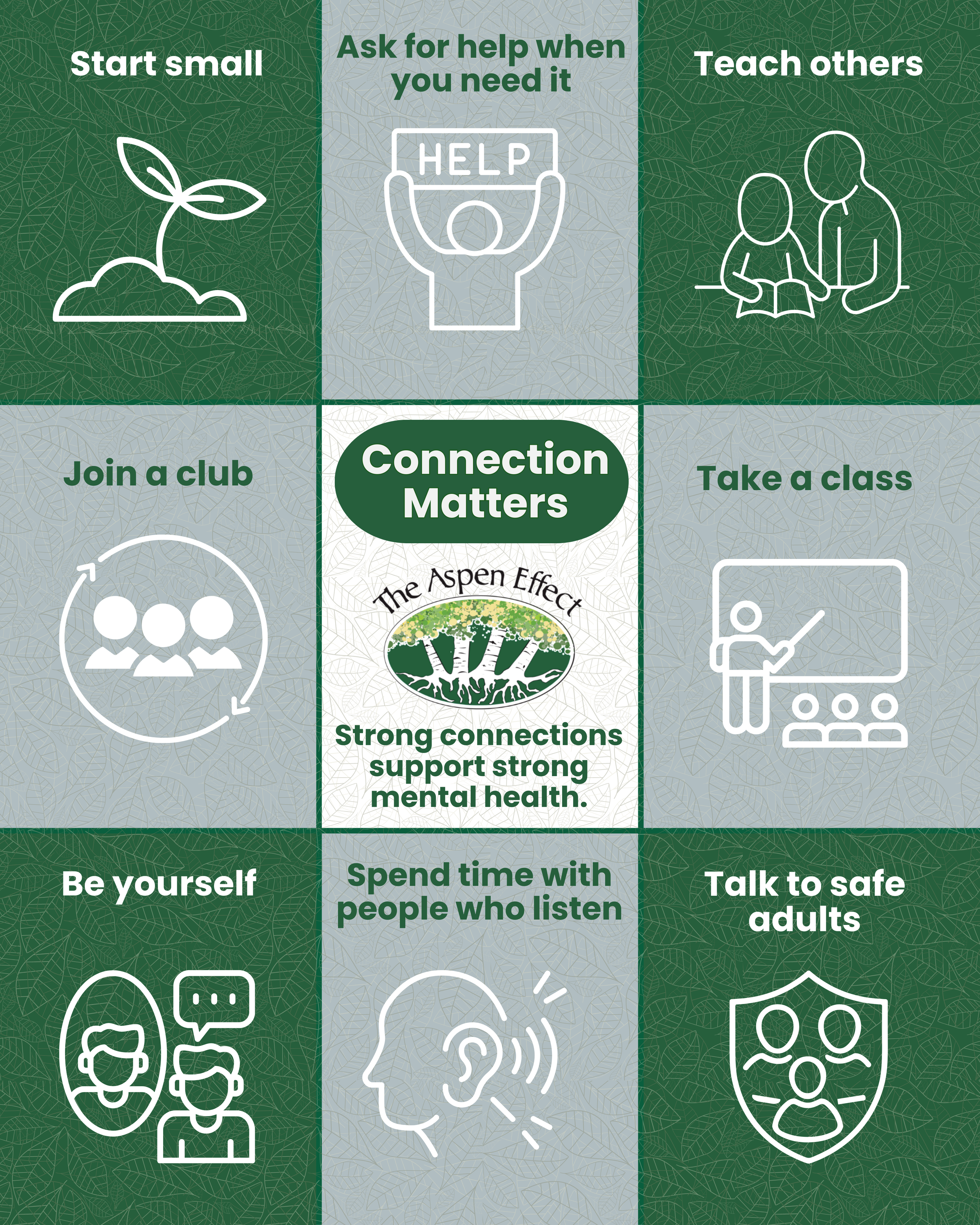
1. Talk to One Safe Adult. Having one trusted adult can make a big difference in a young person’s life. A safe adult can listen, offer guidance, and help youth feel supported during hard moments.
2. Join a Group or Activity. Clubs, sports, art, or volunteer groups help youth meet others with similar interests. Shared activities create natural opportunities for connection and friendship.
3. Spend Time With People Who Listen. Being listened to helps youth feel valued and understood. Feeling heard builds trust and makes it easier to open up about emotions.
4. Show Up in Safe Spaces. Safe spaces help youth relax and be themselves. When young people feel welcome, connection can happen more easily.
5. Start Small. Connection does not have to start with big conversations. A simple hello, text, or smile can be the first step toward building trust.
6. Connect Through Shared Activities. Some youth connect best while doing something together rather than talking. Activities create shared experiences that strengthen relationships over time.
7. Ask for Help When Needed. Reaching out for help shows strength, not weakness. Asking for support helps youth learn they do not have to handle everything alone.
8. Be Yourself. Real connection happens when youth feel accepted for who they are. Being able to show up without pretending builds confidence and emotional safety.
At The Aspen Effect, programs are designed to help youth build healthy connections in safe and supportive environments. When young people feel connected, they are better able to manage stress, build resilience, and move forward with hope.
Connection is not a luxury for youth. It is a need.
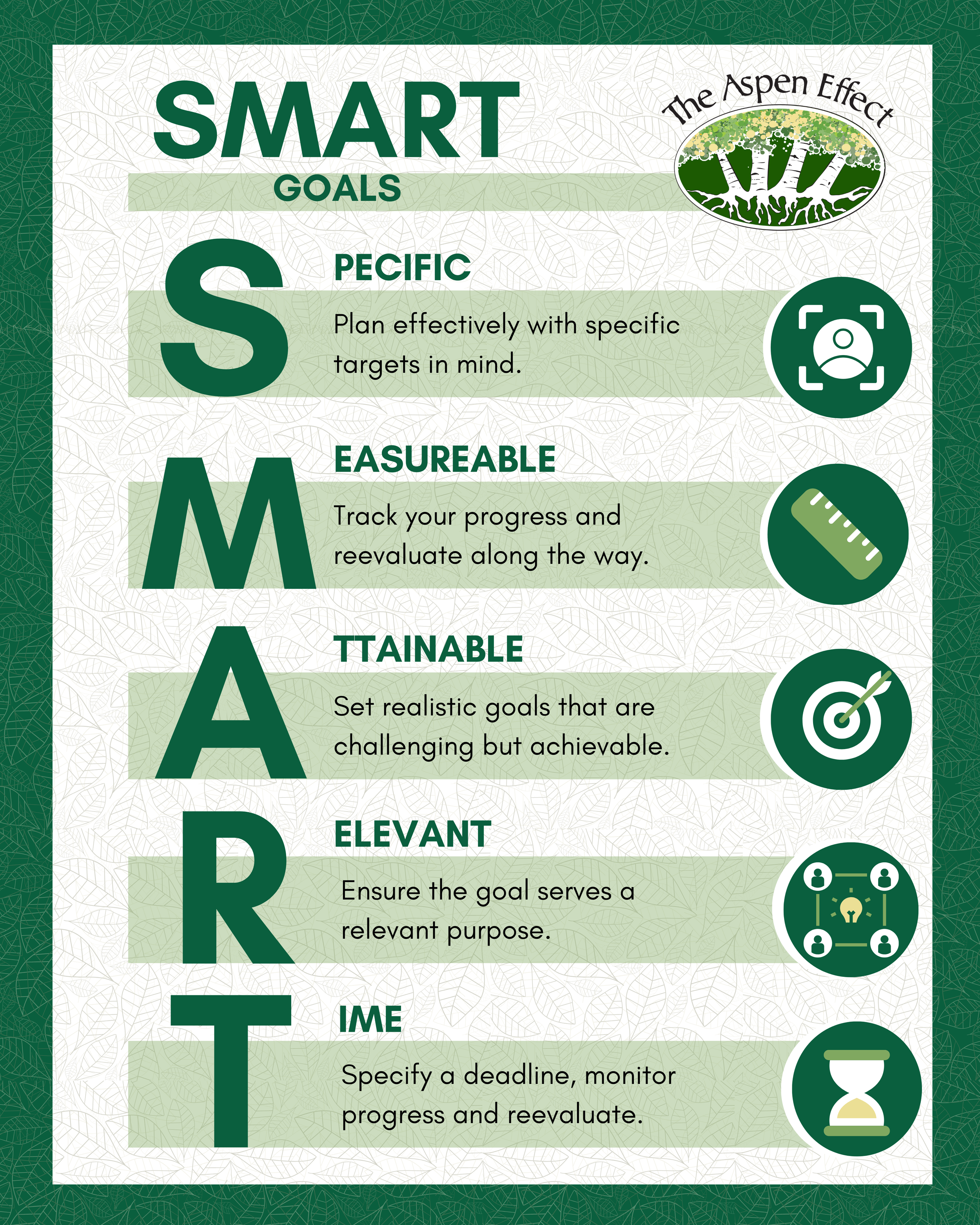
Set SMART Goals
SMART goals give youth tools they can use beyond one moment. In our programs, mentors help youth set SMART goals and use them during mentoring sessions to complete a project. Clear goals and supportive mentors help youth feel capable and confident.
Setting goals is more than just planning—it helps youth see what is possible and gives them steps to get there. Even small goals can build momentum and show young people that their efforts matter.
Our mentors work side by side with youth, offering guidance, encouragement, and a safe space to try new things. With each goal completed, young people gain skills and confidence that carry into school, home, and everyday life.
What goals would you like to accomplish this year?
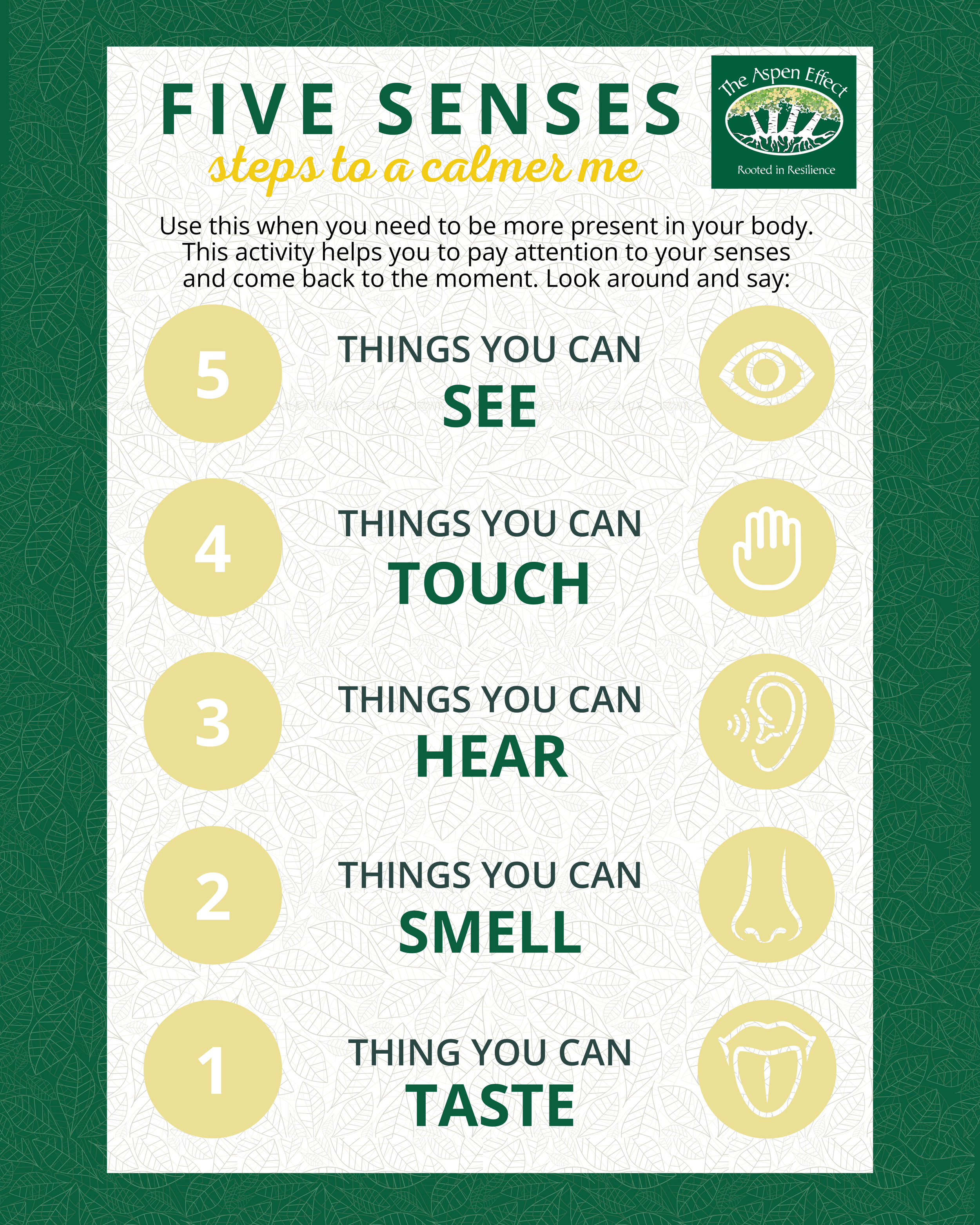
5 Steps to a Calmer Me
Use this when you need to feel more present in your body. This simple grounding exercise helps you slow down and come back to the moment by using your senses.
Look around and notice
5 things you can see
4 things you can touch
3 things you can hear
2 things you can smell
1 thing you can taste
You can do this anywhere. At school. At home. Outside. Even for just one minute.
This is one of the grounding skills we teach in our programming to help youth manage stress, feel safer in their bodies, and build healthy coping tools.
Small steps matter.
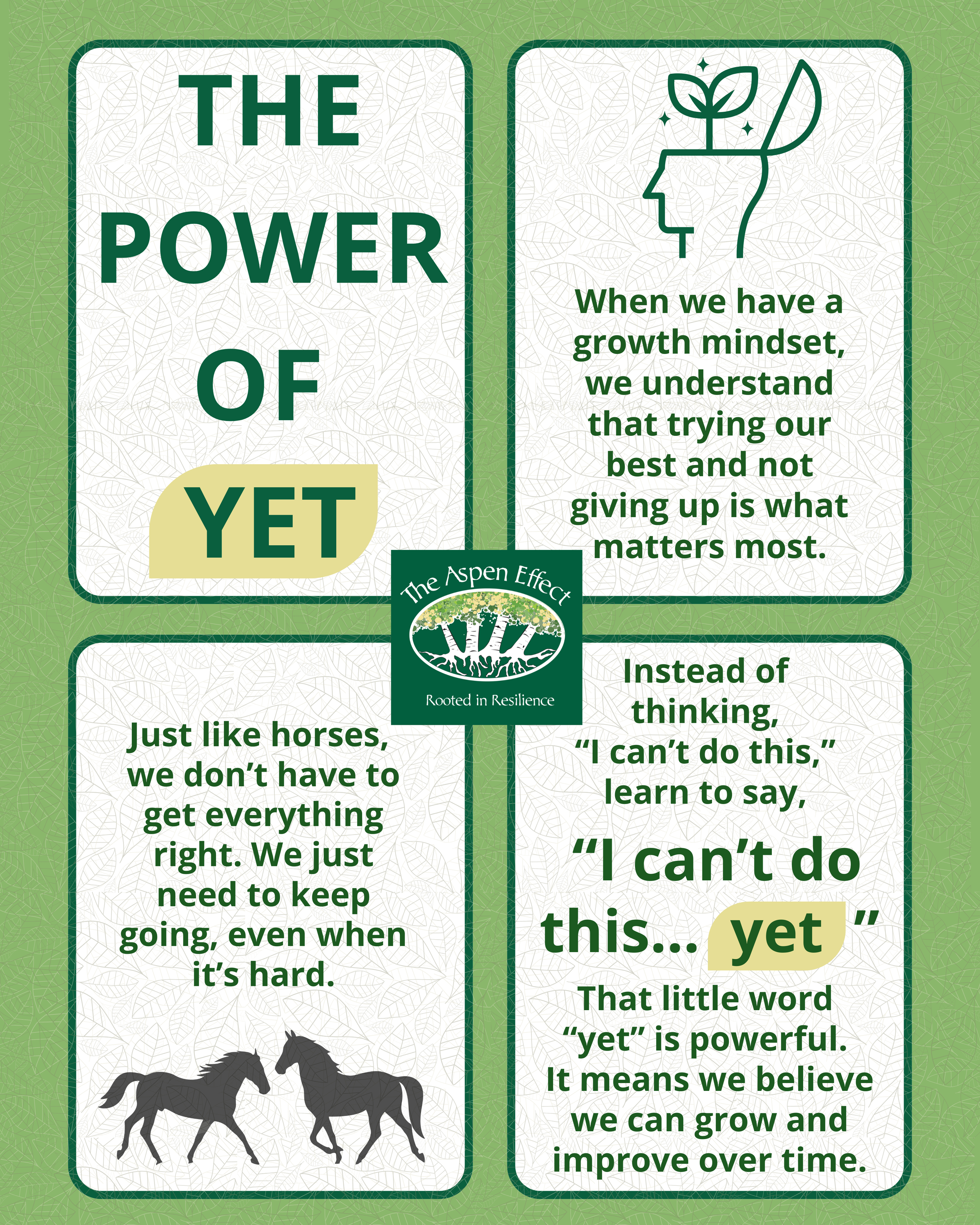
The Power of Yet
When we have a growth mindset, we believe that we can get better at things through practice, effort, and learning from mistakes. It’s not about being perfect—it’s about showing up, trying our best, and not giving up when things feel hard.
Instead of thinking, “I can’t do this,” we learn to say,
“I can’t do this… yet.”
That little word “yet” is powerful.
It means we believe we can grow and improve over time.
Animals, especially horses, are amazing teachers of growth mindset. Horses don’t get everything right the first time. They learn through repetition, patience, and trust. Sometimes they get scared or confused, but they try again. When we work with them gently and consistently, they begin to understand what we’re asking. Watching a horse figure something out reminds us that learning takes time, and effort matters more than being perfect.
Just like horses, we don’t have to be the best right away. What matters is that we keep going, even when it’s tough. When we fall off (literally or not), we get back up. That’s called grit—the ability to stick with something, even when it’s hard. Our animals show us that it’s okay to struggle and to try again. And they show us that every little bit of progress is worth celebrating.
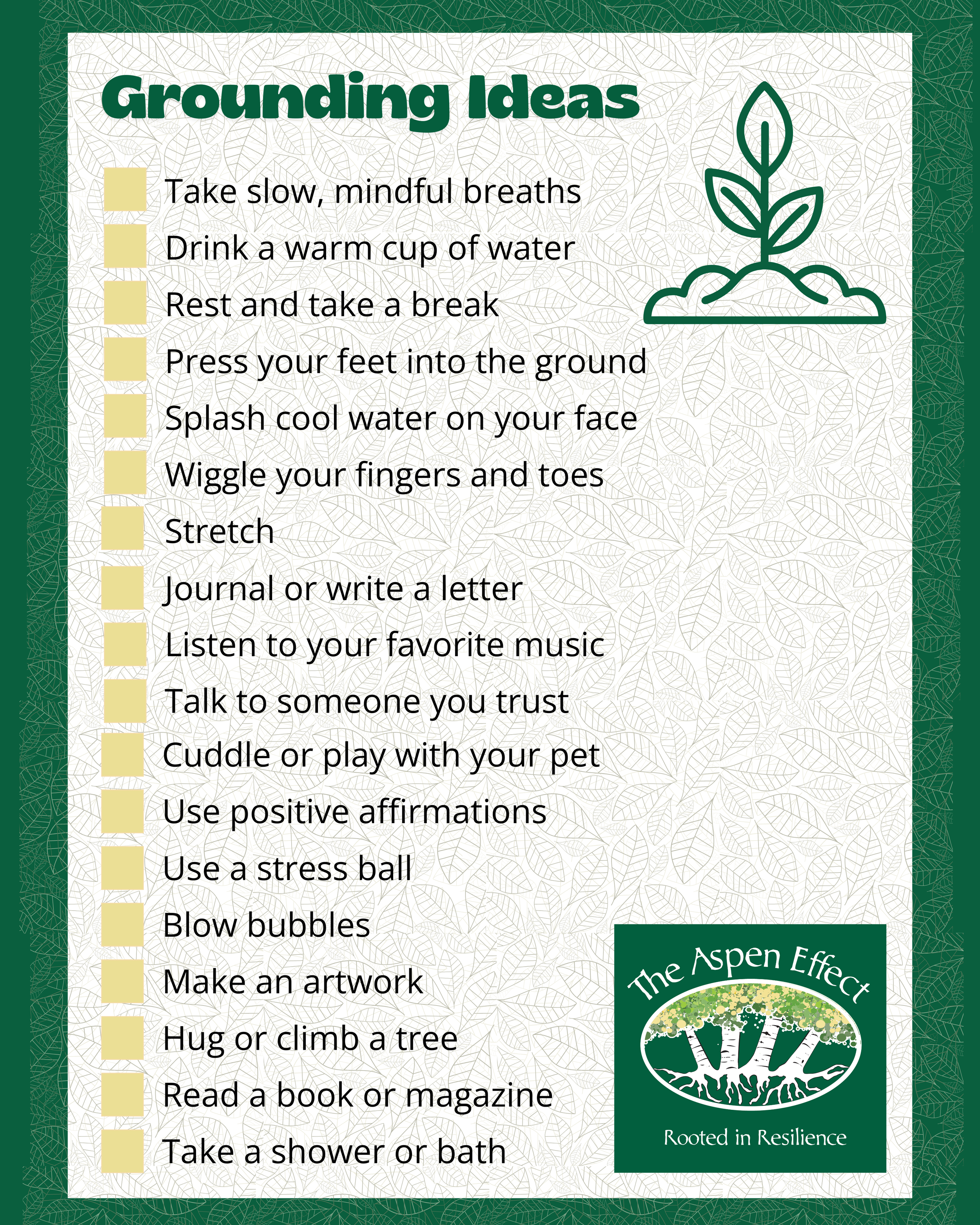
Stay Calm by Grounding
Feeling stressed or upset is something everyone experiences, especially when life feels busy or overwhelming. In our programs, we teach youth grounding skills to help them find calm and feel more in control. Grounding means bringing your attention to what is happening right now, instead of getting stuck in worries about the past or future. By focusing on the present moment, you can slow down racing thoughts and help your body relax.
Grounding works by helping you notice your senses—what you can see, hear, feel, smell, or taste. This gentle focus can signal to your brain that you are safe, which can ease tension and stress. When your mind and body begin to settle, it becomes easier to think clearly, manage emotions, and respond to challenges in healthier ways. These skills are simple, but with practice, they can become powerful tools you can use anytime.
There are many easy ways to practice grounding in your daily life. Spending a few minutes with a pet, making art, journaling your thoughts, stretching your body, or taking slow, deep breaths can make a real difference. You don’t need a lot of time—even just 2 to 5 minutes can help you feel steadier and more balanced. Try one of these ideas today and notice how small moments of grounding can support your calm and well-being.
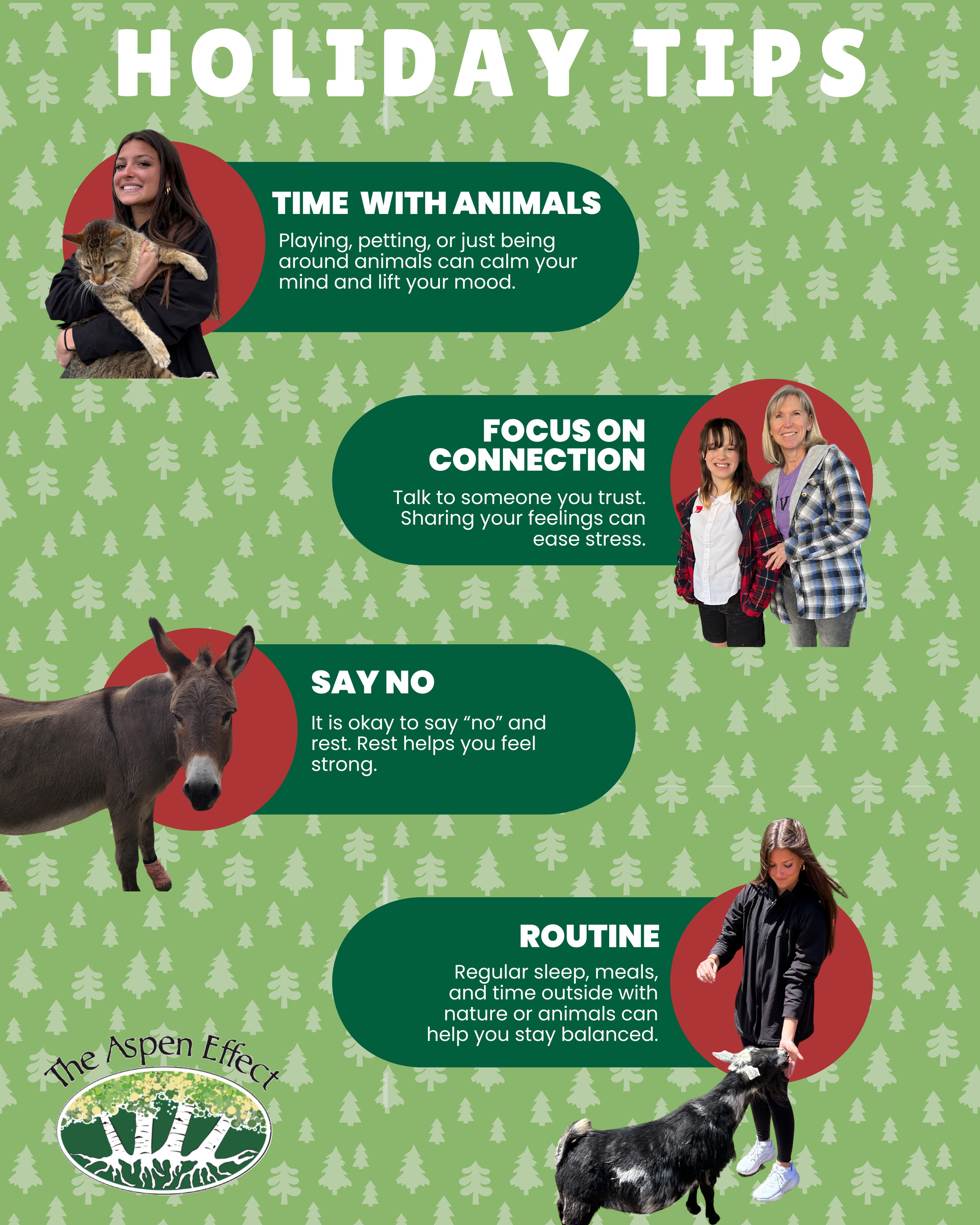
Holiday Tips
The holidays can be full of joy, but they can also bring stress, pressure, or tough emotions. Here are a few simple ways to take care of yourself this season.
Holiday Mental Wellness Tips
Spend time with animals – Playing, petting, or just being around animals can calm your mind and lift your mood. Focus on connection – Talk to someone you trust. Sharing your feelings can ease stress.
Say No– Be realistic, things do not have to be perfect.It is okay to say “no” and rest. Rest helps you feel strong.
Stick to your routine – Regular sleep, meals, and time outside with nature or animals can help you stay balanced.
If the season feels overwhelming, anxious, or just hard to handle, help is available in Douglas County:
Colorado Crisis Line, available 24/7 - Call or text 988 https://www.988colorado.com/
Call 1-844-493-8255 or Text “TALK” to 38255
AllHealth Network – Walk-in crisis and counseling support, 303‑730‑8858 6509 S Santa Fe Dr. Littleton, CO 80120
https://www.allhealthnetwork.org/.../crisis.../walkincenter/
You do not have to handle this season alone.
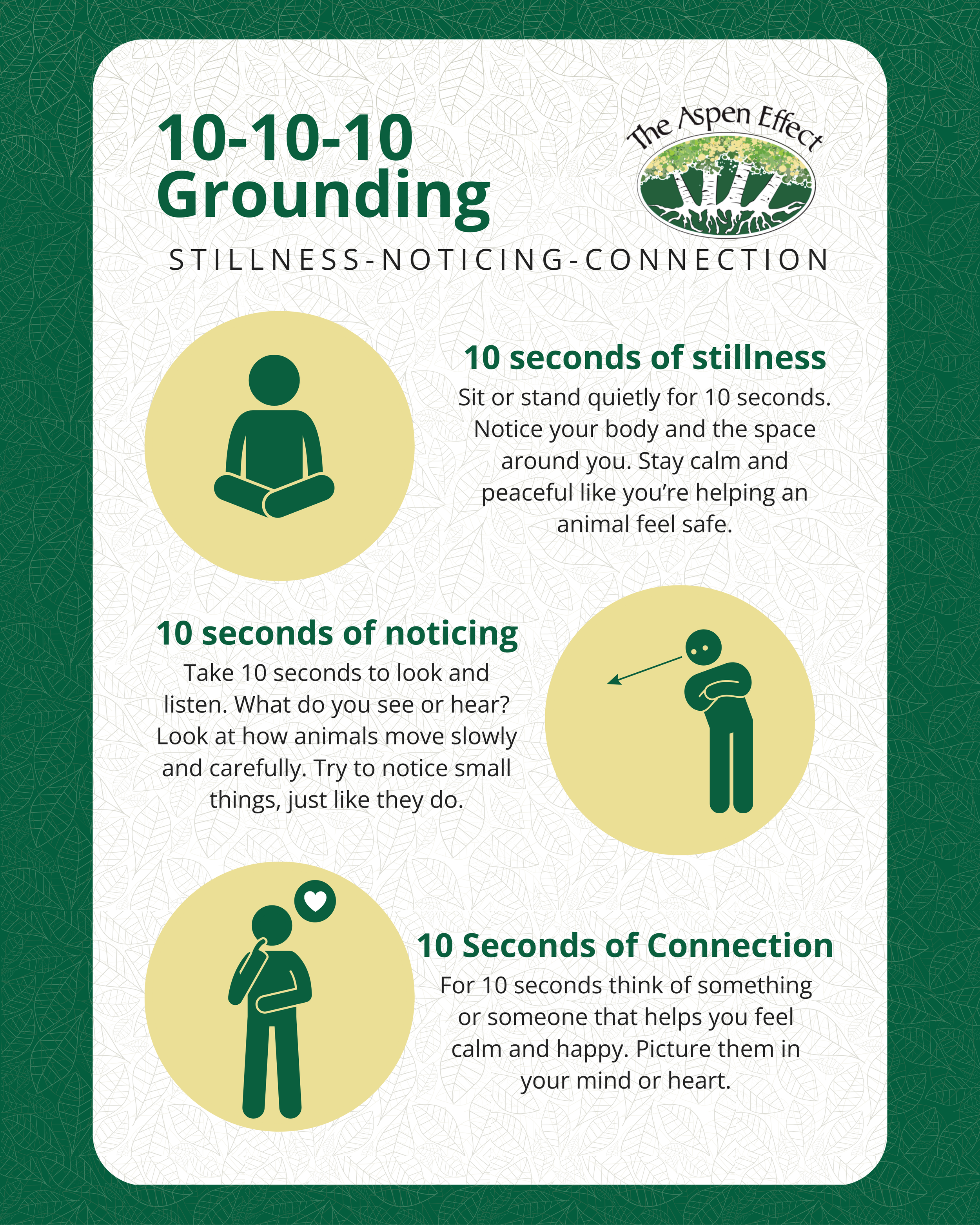
10-10-10 Grounding
The holidays can be loud, full, and stressful. When everything feels rushed or heavy, a simple grounding pause can help your body and mind slow down. This is one of the tools we teach at our child parent resilience camp so participants can calm their bodies and reconnect, even during hard or busy moments.
𝐓𝐫𝐲 𝐭𝐡𝐞 𝟏𝟎 𝟏𝟎 𝟏𝟎 𝐠𝐫𝐨𝐮𝐧𝐝𝐢𝐧𝐠 𝐩𝐫𝐚𝐜𝐭𝐢𝐜𝐞, it takes less than a minute, but it can help you feel more grounded, steady, and present during this busy season.
𝟏𝟎 𝐬𝐞𝐜𝐨𝐧𝐝𝐬 𝐨𝐟 𝐬𝐭𝐢𝐥𝐥𝐧𝐞𝐬𝐬. Sit or stand quietly. Notice your body and the space around you. Stay calm and peaceful, like you are helping an animal feel safe.
𝟏𝟎 𝐬𝐞𝐜𝐨𝐧𝐝𝐬 𝐨𝐟 𝐧𝐨𝐭𝐢𝐜𝐢𝐧𝐠. Look and listen. What do you see or hear right now. Notice small details, the way animals do when they move slowly and carefully.
𝟏𝟎 𝐬𝐞𝐜𝐨𝐧𝐝𝐬 𝐨𝐟 𝐜𝐨𝐧𝐧𝐞𝐜𝐭𝐢𝐨𝐧. Think of a person, place, or animal that helps you feel calm and happy. Picture them in your heart or mind.
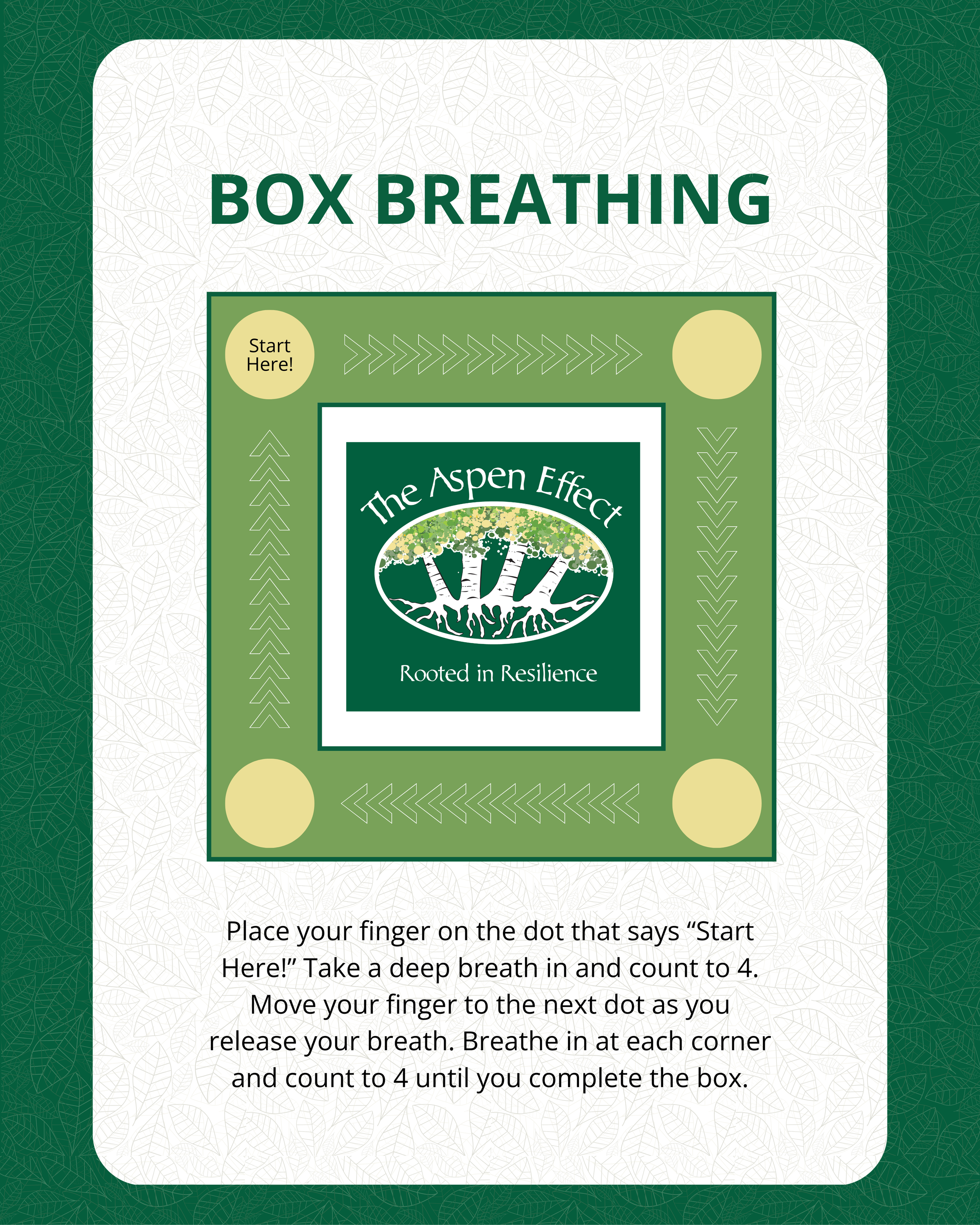
Box Breathing
Box breathing is one of the tools we use to help youth feel more grounded and steady. We teach this skill in our camps and mentoring programs so participants have a simple way to calm their minds when life feels busy or heavy. Place your finger on the “Start Here” dot and follow the arrows. Breathe in for four counts and breathe out for four counts as you move around the box. This easy practice helps reset the body and build confidence over time.
Over time, box breathing can help slow a racing heart, relax tight muscles, and quiet busy thoughts. When your breath becomes steady, your body gets the message that it is safe to slow down. This can make it easier to focus, respond with patience, and feel more in control, even during stressful moments.
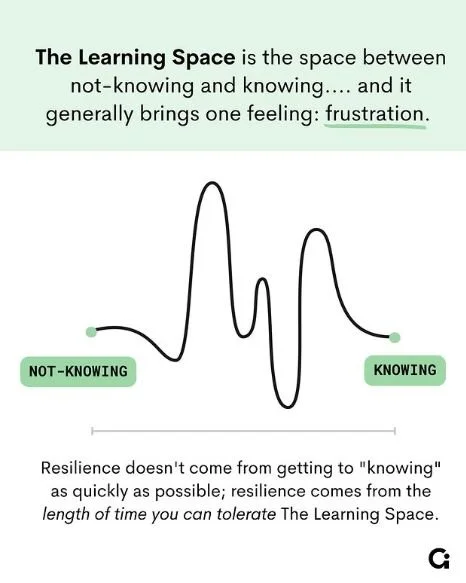
The Learning Space
Have you heard of The Learning Space? Dr. Becky at Good Inside teaches that the learning space is the hard space between “not knowing” and “knowing.” Most of us don't like this space because it brings frustration, self-doubt, and the feeling that we are not getting it right.
But this space is where resilience grows. Strength does not come from learning fast. It comes from staying with the challenge long enough to figure things out.
At The Aspen Effect, we see this every week. A young person might learn a new skill and try something that feels uncomfortable at first. They feel unsure, then frustrated, and then slowly they settle in. With support, they stay in their own Learning Space long enough to discover confidence, courage, and connection.
When we give kids safe places to practice patience and try again, we help them build resilience that lasts.
Today, notice where your Learning Space is. Take a breath, stay with it, and remember that growth often happens in the messy middle.
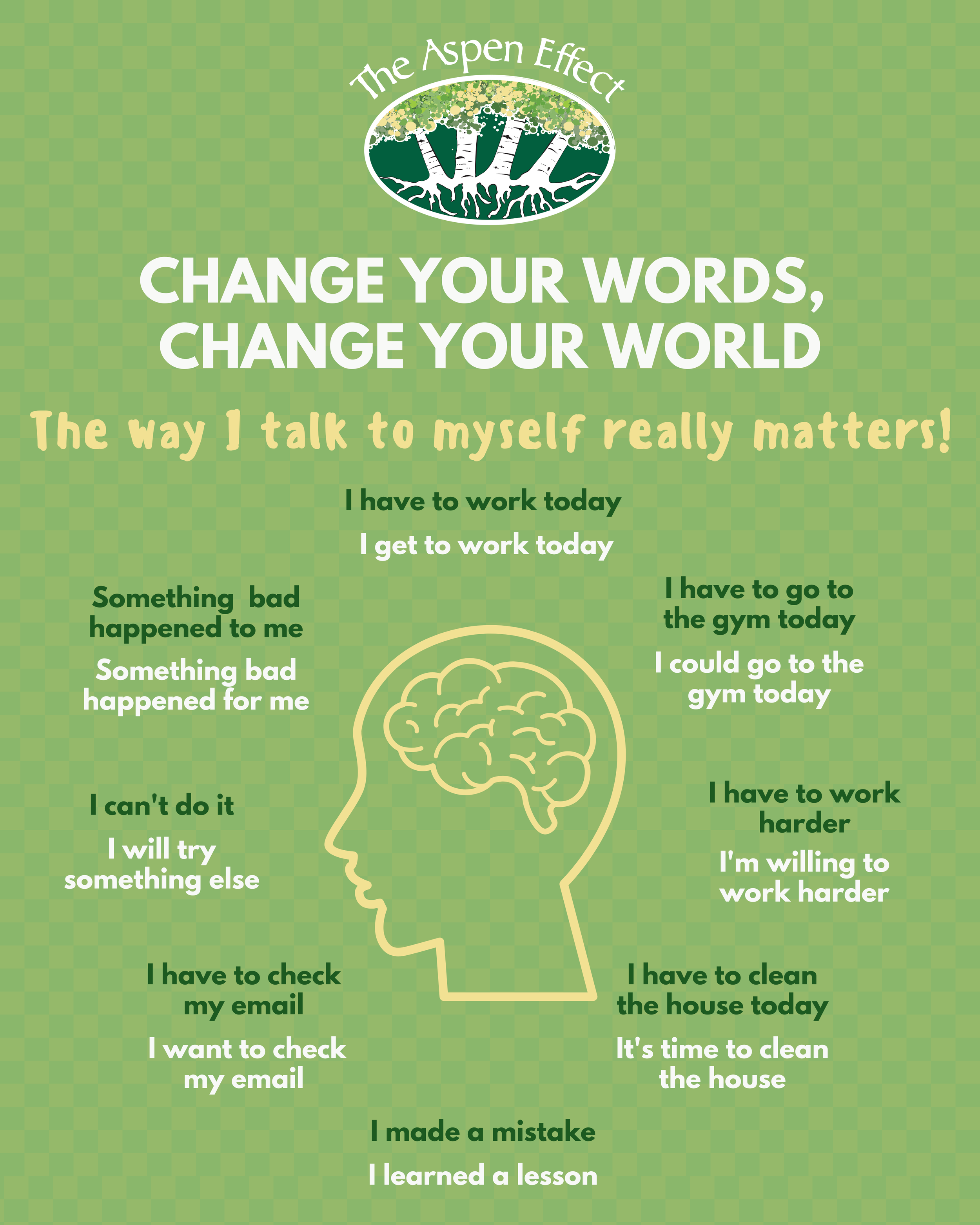
Change Your Words, Change Your World
Sometimes the toughest conversations are the ones we have with… ourselves. The words we use in our own heads can either weigh us down or lift us up. We remind our youth (and honestly, all of us adults too) that shifting your self-talk even slightly can change how you feel about your day. It’s not about pretending everything is perfect. It’s about choosing words that help you breathe, heal, and rise.
“I have to…” → “I get to…”
“I made a mistake.” → “I learned something.”
“I can’t do it.” → “I’ll try another way.”
Small language shifts create big mindset shifts. Let’s practice talking to ourselves like someone we care about.
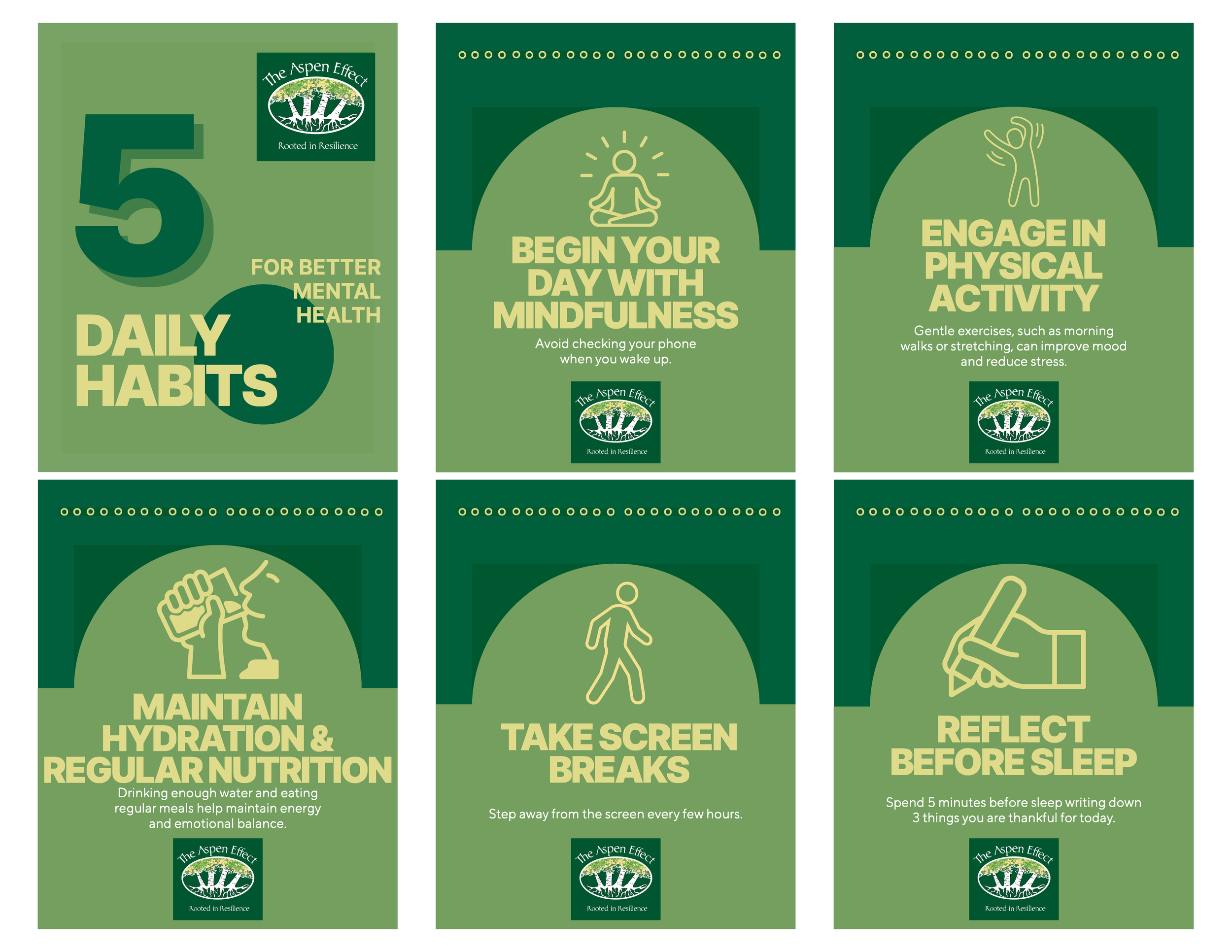
5 Daily Habits
The way we care for ourselves each day adds up; one choice, one breath, one small action at a time.
These five daily practices can help you feel more grounded, calm, and connected to yourself and the world around you. Whether it’s spending a few quiet minutes outdoors, writing down something you’re grateful for, or reaching out to a friend, simple moments of care can shift how you move through the day.
Choose one practice to focus on this week. Start small, stay consistent, and notice how it changes your mood and energy. Sometimes the smallest steps lead to the biggest change.

Gratitude Calendar
Gratitude helps us slow down and notice what is good. At The Aspen Effect, we see how small acts of kindness and thankfulness can bring calm and connection to youth, families, and mentors.
To make gratitude easy to practice, we created a free Gratitude Calendar for November. Each day has a simple idea like “compliment a friend,” “thank a teacher,” or “spend time outside.” These small actions help build a habit of noticing and sharing the good that is already around us.
You can use the calendar at home, in school, or with a mentor group. Try doing one prompt each day or pick a few that feel right for you. The goal is not to be perfect but to practice paying attention to the things that make life better.
When we focus on gratitude, we see more reasons to hope. We feel more grounded, connected, and ready to care for others.
Download your free Gratitude Calendar from The Aspen Effect and join us in filling the month with simple moments of thanks.